Have you ever had one of your outbound calls tagged as a spam or scam call? Has it cost you valuable connections with your customers, wasted time, and lost revenue?
If you’re reading this post, our guess is you have, and you’re fed up with it!
But don’t bring out the pitchforks just yet. Although getting flagged can be frustrating, it’s also part of a vital caller protection process to prevent bad actors and annoying robocallers from abusing customers’ trust.
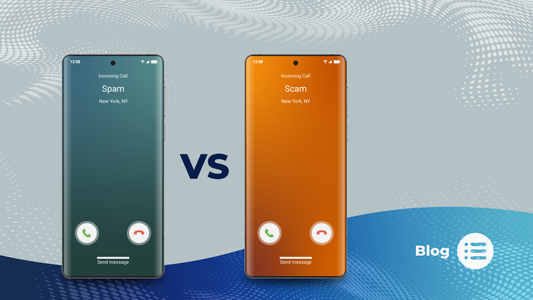
You may also wonder how carriers flag numbers as a spam vs scam risk and how to prevent the dreaded tags from showing up on your calls. To solve that problem, we first need to establish the difference between a scam and a spam call – and no, they aren’t the same thing.
Scam vs. Spam
So what’s the difference between scam vs spam?
Scam calls are defined as fraudulent calls where the scammer attempts to scam victims out of their personal information to defraud them – usually for money.
In contrast, a spam call is not necessarily a scam attempt – many spam calls are from legitimate businesses that use unfair or poor calling practices, which leads to annoyed customers. Examples of spammers range from political or polling calls to charities that repeatedly call numbers to gather donations.
Although both spam and scam calls can be seen as fraudulent, spam calls are given a different distinction. They are often legitimate calls from real businesses but can still be unwanted communication for customers.
Tagging these calls allows customers to choose whether to answer or ignore a call.
How do these calls get tagged?
Every carrier has a different way of determining which calls are likely wanted, fraudulent (scam), or legitimate but unwanted (spam).
Calls not from a legitimate business in the T-Mobile network and potentially fraudulent are given the “Scam Likely” tag. With the help of First Orion, T-Mobile uses AI-powered analytics to determine which calls are scams and which ones are not.
The technology allows First Orion to identify which calls are spoofed by bad actors and which are legitimate. A national bank organization could make thousands of calls every day and still be at risk of getting spoofed. But with our AI technology, we can identify and tag the spoofed calls as “Scam Likely.” Legitimate calls will not be tagged.
Spam tags from other carriers do not use the same technology as First Orion and the T-Mobile network.
Other carriers don’t have the same capabilities and often rely on consumer feedback for spam tagging. They also don’t differentiate between a legitimate and a spoofed call from a business, which can lead to more verified calls going unanswered.
Are you looking to stop the scam and spam tags? Keep reading for some helpful best practices.
How to prevent getting tagged
Businesses often think there’s nothing they can do to prevent getting tagged as spam or scam calls. But good news – there are some best practices you can follow to avoid an incorrect label.
One of the first steps your business should take is to register your number through our free Business Number Registration. While this doesn’t guarantee your numbers won’t get tagged as spam or scam, it does help carriers organize your business into the appropriate category and identify it as a legitimate business.
After registering your business’s number, run through the following checklist of best practices to determine if your calling strategy is fair and appropriate for customers.
- Don’t use one central number for all calls.
- Avoid excessive calling to the same recipient.
- Ensure users expect a call.
- Respect users’ requests not to be contacted.
- Provide a consistent, accurate, and user-dialable telephone number with every call you make.
- Provide a consistent Calling Name that matches the context.
- Align the context and content of calls for the duration of the number’s assignment.
- Document standard calling patterns.
- Don’t use a pre-recorded message for lead prospecting calls.
- Don’t call unassigned numbers frequently.
While removing a spam or scam tag isn’t as easy as flipping a switch, following these calling practices can improve your business calling outcomes and prevent call blocking and future unwanted spam vs scam labeling.
But there’s still one other option that you can use to identify your calls to your customers.
Branded Calling
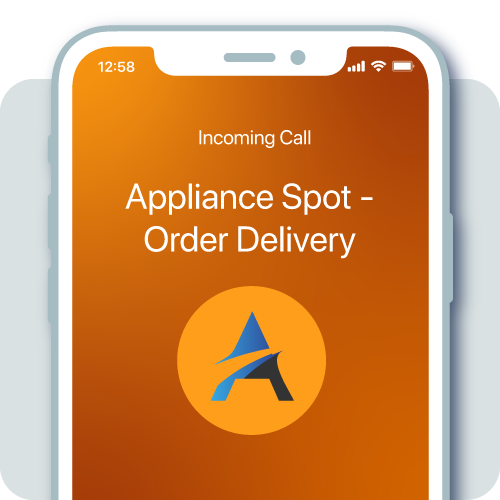
With INFORM®, you can properly identify your business with a 32-character customizable display name. On many devices, you can also display your reason for calling, providing more context to your customers. Optionally, add a logo to take your outbound call to a whole new level!
INFORM is a great tool to have in your calling arsenal. However, it should be noted that each carrier decides to tag a call as they see fit based on their own spam and scam call mitigation processes.
To fully protect against call spoofing, you can add call authentication to INFORM. This feature is implemented through a REST API integration with your calling platform, ensuring secure and verified calls. More information on call authentication can be found on our website.
INFORM also gets you:
- Brand protection from scammers.
- Custom branding is retained in the phone call log.
- Superior call data and best-in-class analytics to help improve your outbound calling strategy.
INFORM reaches all major U.S. carriers, covering nearly 400 million devices, and provides added assurance when making outbound calls.
Learn About the Solutions Behind Every Trusted Connection
From small businesses to global enterprises, First Orion helps you increase answer rates, verify identity, and build customer trust and transparency.
INFORM Branded Calling
Show your business name, logo, and reason for call so more customers answer with confidence.
ENRICH® Branded Messaging
Send secure, branded RCS messages with rich media and two-way interactions.
AFFIRM® Reputation Monitoring
Monitor how your outbound calls appear and catch labeling discrepancies fast.
SENTRY® Call Blocking
Block bad actors from spoofing your numbers, protecting trust with your customers.
PROTECT+ Risk Detection
Detect suspicious inbound call activity in real time with intelligent risk analysis.
Related Resources
Building Brand Reputation: CNAM vs. INFORM
Learn the difference between CNAM (Caller ID Name) and First Orion's INFORM Branded Calling, why INFORM is superior, and how to get started with INFORM.
Case Study: A high-risk insurer boosted engagement rate 68% with INFORM Branded Calling
By deploying INFORM® Branded Calling, the insurer replaced their anonymous caller ID with their verified brand name and call reason.
Guide: Going Beyond Voice with ENRICH Branded Messaging
First Orion’s ENRICH Branded Messaging leverages rich communication services (RCS) to transform the native text app into a secure, interactive, and visually branded storefront. By providing verified sender identities and rich media capabilities, ENRICH delivers a brand experience. With engagement rates up to seven times higher than SMS, ENRICH is the essential upgrade for businesses looking to foster trust and drive measurable results.