Key Takeaways
- Carrier-direct authentication blocks spoofed calls before they reach your customers, stopping impersonation at the network level.
- Reputation monitoring tools detect spam and scam mislabeling so you can fix number health before answer rates drop.
- First Orion delivers spoof protection across all major U.S. carriers with real-time call authentication and blocking.
- Compliance-ready platforms protect both regulatory standing and customer trust through verified caller identity workflows.
- Inbound call screening defends contact center agents from spoofing-based social engineering and fraud attempts.
Key Factors in Choosing Bank Spoof Protection Platforms
Bank impersonation calls cost U.S. consumers billions in losses each year, and the institutions being spoofed pay a steep price in eroded trust, increased call avoidance, and regulatory scrutiny. Choosing the right spoof protection platform requires more than comparing feature checklists.
You need to evaluate how a platform authenticates calls at the carrier level, how it monitors your number reputation across networks, and whether it extends verified identity to messaging channels. This article breaks down eight factors that fraud, risk, and telecom leaders at financial institutions should assess when selecting a spoof protection platform.
What to Evaluate in a Spoof Protection Platform for Banks
1. Carrier-Direct Authentication Depth
STIR/SHAKEN verification is a regulatory baseline, not a complete defense. Sophisticated spoofers route calls through carriers with weaker attestation practices, and the resulting calls can still display your institution's number on a customer's screen.
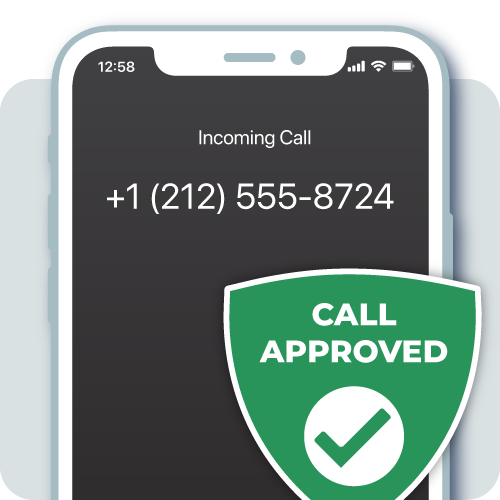
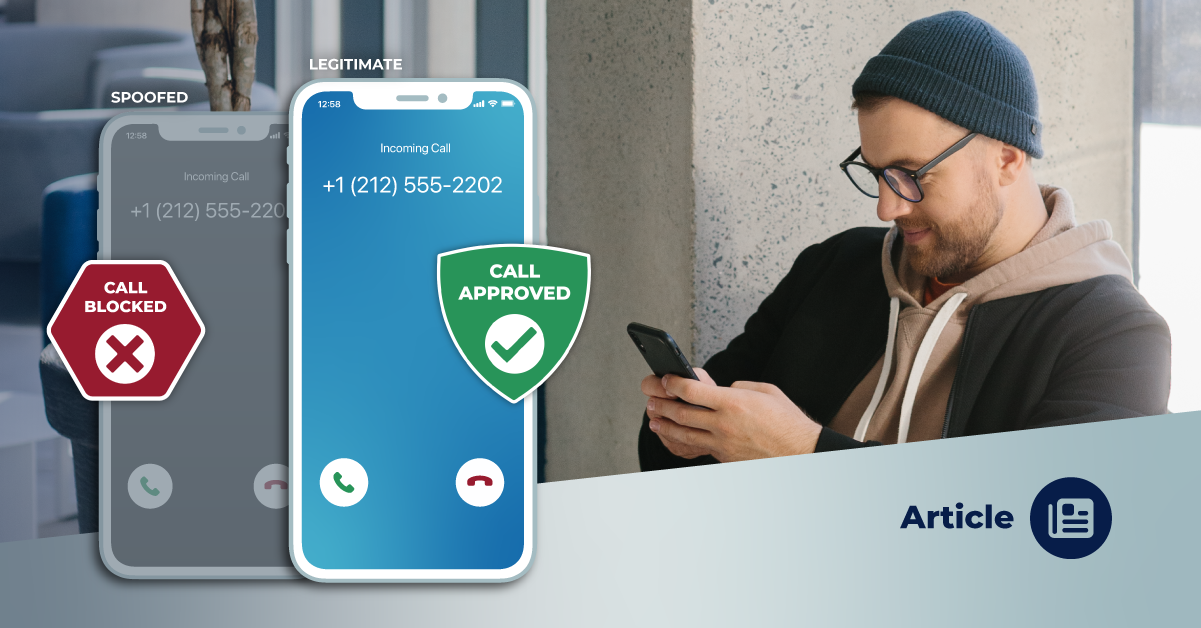
Evaluate whether a platform adds out-of-band authentication on top of STIR/SHAKEN. SENTRY® Call Blocking generates a unique cryptographic key for each outbound call and shares it with the receiving carrier. Calls without a matching key are blocked before they ever ring on your customer's phone.
2. Carrier Network Reach
A spoof protection platform is only as effective as its carrier coverage. If your authenticated calls travel through one carrier, but your customers sit on another, the authentication signal may never arrive. That blind spot is exactly what spoofers exploit.
Look for solutions that operate across T-Mobile, AT&T, Verizon, and their MVNOs simultaneously. Your fraud alert calls and account notifications carry verified identity regardless of which network your customer uses.
3. Reputation Monitoring and Number Health Visibility
Legitimate outbound numbers can accumulate spam or scam tags from carrier analytics when calling patterns change or volumes spike. A mislabeled number means customers ignore your fraud alerts. That's a direct operational risk for any financial institution.
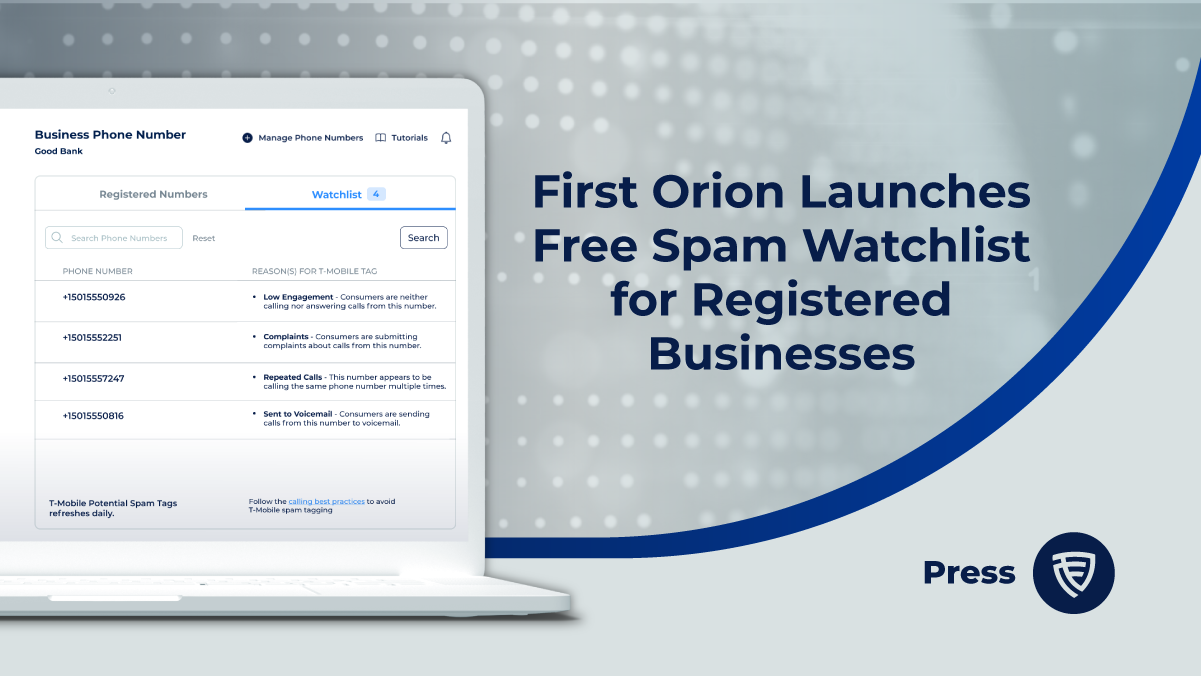
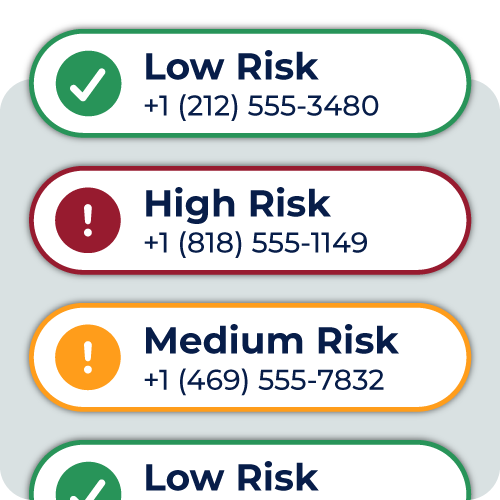
Choose a platform that monitors how your numbers display across carriers and devices. AFFIRM™ Reputation Monitoring runs validation calls, detects mislabeling in real time, and surfaces those insights in a single dashboard so your compliance and telecom teams can act before answer rates deteriorate.
4. Branded Caller Identity for Outbound Engagement
Blocking spoofed calls solves half the equation. The other half: getting your real calls answered. According to FTC data released in 2026, people reported losing $3.5 billion to imposter scams in 2025, with bank impersonators driving some of the costliest losses. That environment has conditioned consumers to ignore unknown numbers entirely.
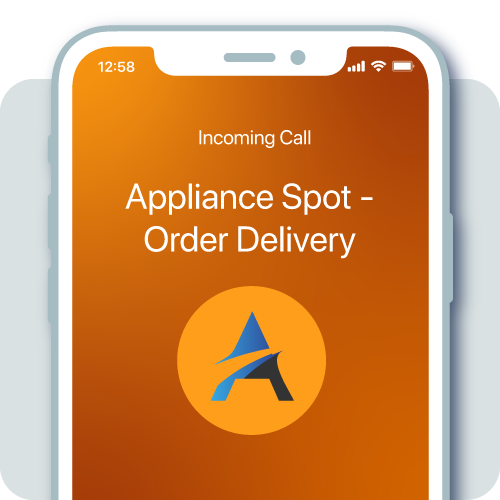
First Orion's INFORM® Branded Calling displays your institution's name, logo (available with INFORM with Logo), and call reason on the recipient's screen. When a customer sees "First National Bank Fraud Alert" instead of a ten-digit number, they answer. INFORM supports up to 32 characters of customized display text across all major U.S. carriers.
5. Inbound Call Screening and Risk Detection
Spoof protection isn't limited to outbound defense. Bad actors also spoof your number to call into your contact center, posing as customers to extract account details or authorize transfers. This is a growing vector for authorized push payment fraud in banking.
A complete platform screens inbound calls for risk signals before they reach an agent. PROTECT+ Risk Detection analyzes inbound call activity in real time and flags suspicious patterns, reducing fraud risk while improving agent productivity. For financial institutions, that means fewer social engineering attacks reach the people handling sensitive account data.
6. Compliance Alignment with FCC and TCPA Standards
Financial institutions face strict regulatory expectations for outbound calling. The FCC has expanded STIR/SHAKEN requirements, and TCPA enforcement continues to tighten around consent, calling frequency, and truthful caller identification. Non-compliance carries significant financial penalties and reputational exposure.
Your spoof protection platform should treat compliance as core architecture, not a secondary consideration. Look for built-in consent management, Do Not Call list scrubbing, and caller ID accuracy controls. First Orion's ISO 27001:2022 certification and carrier-level verification workflows keep your institution aligned with both federal regulations and carrier standards.
7. Cross-Channel Trust with Verified Messaging
Your customers don't interact with your bank on just one channel. A spoof protection strategy that covers voice but ignores messaging leaves an open door for SMS phishing (smishing) attacks that impersonate your institution.
Evaluate whether the platform extends verified identity to messaging. ENRICH® Branded Messaging delivers verified Rich Communication Services (RCS) messages with your logo and branding directly in the native messaging app. That cross-channel consistency means your customer sees a verified identity on both calls and texts, building trust that compounds over time.
8. Integration with Existing Call Infrastructure
Banks run complex telephony environments with multiple PBX systems, SIP trunking, and contact center platforms like Amazon Connect, Genesys, NICE, and Cisco. Your spoof protection platform needs to operate across that existing infrastructure without forcing a costly rebuild or migration.
First Orion supports REST API and SIP integration, with typical deployment measured in days rather than quarters. That speed matters when your fraud operations team identifies an active spoofing campaign and needs protection deployed before losses compound across your customer base.
FAQs about Key Factors in Choosing Bank Spoof Protection Platforms
What is number spoofing, and why does it target banks?
Number spoofing manipulates the caller ID to display a bank's real phone number on the recipient's screen. Fraudsters target banks because customers trust calls that appear to come from their financial institution, making impersonation a highly successful attack vector.
Does STIR/SHAKEN fully protect banks from Spoofing?
STIR/SHAKEN is a verification framework, not a blocking mechanism. It attests the calling party's identity at the network level, but calls routed through non-compliant carriers can still reach your customers. Adding out-of-band SENTRY with call authentication closes that gap.
How does reputation monitoring help with spoof protection?
Reputation monitoring tracks how your outbound numbers are labeled across carriers. If a number gets flagged as spam, your legitimate fraud alerts go unanswered. First Orion's AFFIRM detects mislabeling so your team can correct number health before it impacts customer safety.
Can spoof protection platforms defend inbound calls too?
Yes. Inbound spoof protection screens calls arriving at your contact center and flags risk indicators before agents pick up. PROTECT+ by First Orion analyzes inbound activity in real time to block social engineering and impersonation attempts targeting your agents.
How quickly can a bank deploy spoof protection?
First Orion deploys through REST API or SIP integration, and most financial institutions are operational in days. The platform works with your existing telephony infrastructure, so your team doesn't need to rebuild call routing or replace contact center technology.
Why should banks pair branded calling with spoof protection?
Blocking spoofed calls is half the defense. Branded calling ensures your real calls get answered by displaying your institution's name and call reason. First Orion pairs SENTRY with INFORM to create a trust loop where spoofed calls are blocked, and verified calls carry your brand.
Related Resources
How to Prevent Scams Calls from Reaching Your Customers
Why Business Registration and Verification are the Foundation of Trusted Business Communications