Financial institutions rely on phone calls to deliver their most critical communications: fraud alerts, loan approvals, and account updates. Yet, that channel has become the most exploited in the industry. Scammers no longer send random robocalls but study the reputations of the bank’s and credit union’s customers trust, then use that trust as a weapon. The result is a crisis that costs far more than the dollars lost to each fraud event.
Only 32% of institutions currently have solutions in place specifically for Authorized Push Payment fraud¹, which is the exact type of fraud that Call Authentication is designed to stop. For financial leaders, the question is no longer just about how to get customers to answer the phone. It is about how to prove that you are who you say you are before a scammer does.
When Your Reputation Becomes a Weapon
Scammers have evolved into sophisticated social engineers who understand something critical: the most powerful asset a bank has is its customers' trust, and that trust can be weaponized.
This is the "Halo Effect." By hijacking the hard-earned reputation of trusted financial institutions, fraudsters lower a victim's guard before striking. Using AI voice cloning and advanced spoofing to appear as the "Bank Fraud Department," they trick consumers into bypassing two-factor authentication or authorizing "test" transfers. This tactic, Authorized Push Payment fraud, has become the primary engine of loss in the industry. It’s projected that U.S. APP fraud losses will reach $14.9 billion by 20282.
In 2025, this threat crossed a new threshold. AI-assisted deepfake bank fraud emerged as a top-tier attack vector, with scammers using generative AI to clone the voices of real bank employees or executives to authorize high-value transfers. Deepfake-enabled fraud losses exceeded $200 million in North America in Q1 2025 alone, and AI-driven fraud losses are projected to reach $40 billion globally by 2027³. Voice cloning now requires as little as a few seconds of audio, and synthetic voices have effectively crossed the "indistinguishable threshold" for ordinary listeners⁴.
The result is a customer base conditioned to distrust everything on their screens. They do not pick up. They do not engage. And when they do engage, they remain on guard in ways that impede legitimate service. The institution pays the price twice: once in fraud losses, and again in a fractured customer relationship.
What is Call Authentication?
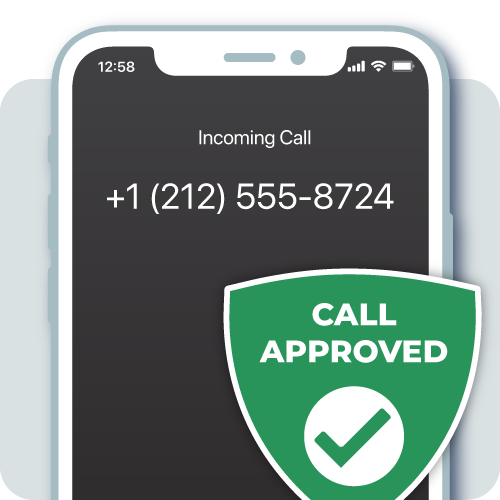
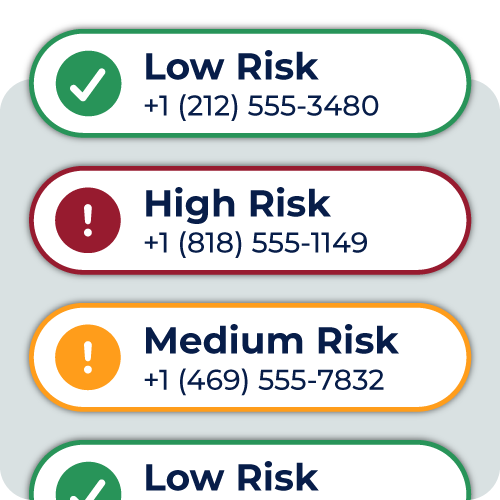
INFORM with Call Authentication gives financial institutions a verifiable, technical proof of identity. It is not just a display name, but a cryptographically backed confirmation that the call is legitimate. First Orion's solution works by verifying three critical elements on every outbound call:
- The calling party: Your institution is confirmed as the originator of the call, not an impersonator.
- The called party: The recipient is verified, ensuring the right person is being reached.
- The precise timeframe: Authentication is tied to the specific moment of the call, closing loopholes that replay-based fraud exploits.
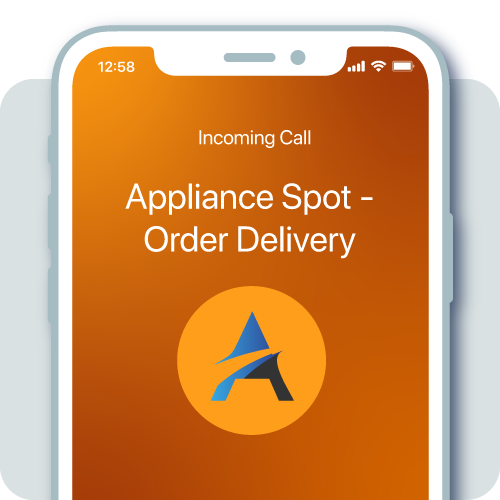
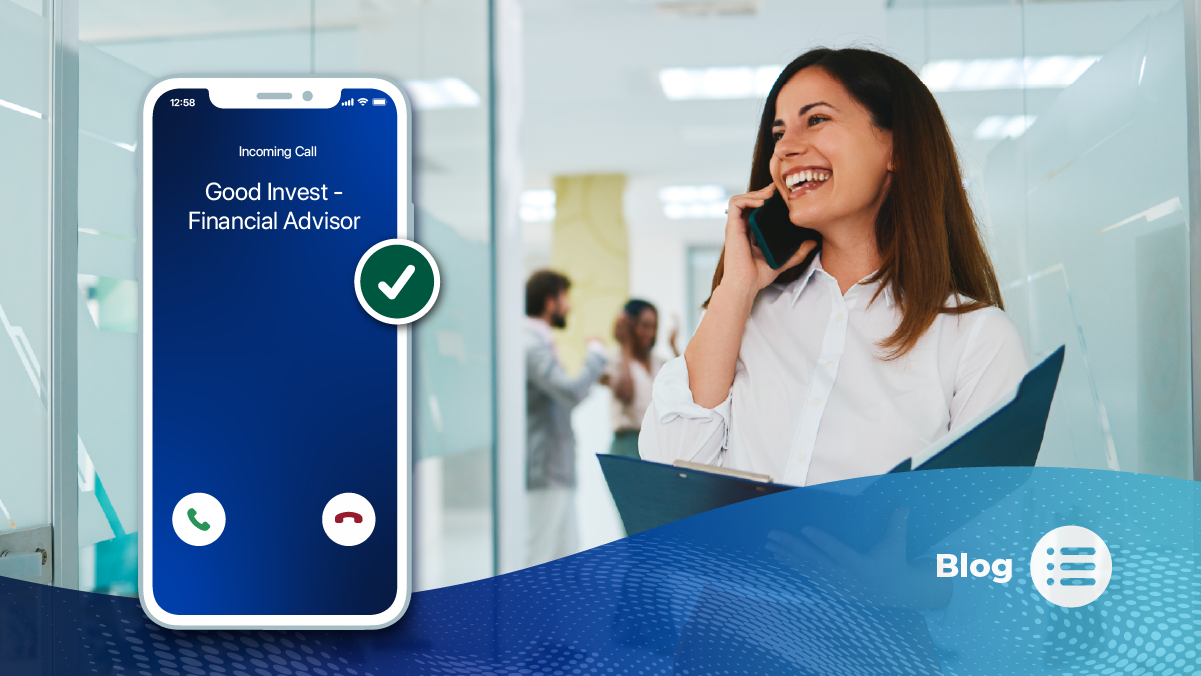
"As the solution powering INFORM® Branded Calling with Logo and SENTRY® Call Blocking, Call Authentication ensures that only legitimate calls receive branded display treatment or are even delivered to the recipient," said Nesia Dotson, Associate Director of Product Marketing at First Orion. "Spoofed calls using your institution's identity are intercepted and blocked before they ever reach your customer. Authenticated calls get through, and they arrive with your business identity clearly displayed, restoring the confidence your customers need to pick up the phone."
Call Authentication is Non-Negotiable for Financial Institutions
Because banks and lenders are constant targets for scammers who spoof numbers to impersonate official representatives, it is vital that INFORM Branded Calling never travels alone. It’s important to be paired with Call Authentication to act as a security seal for every dial.
"In an industry built on trust, you cannot separate your brand’s identity from its security,” Dotson said. “For financial institutions, pairing branding with authentication isn't a luxury; it’s the only way to ensure that when a customer sees your name, they are seeing a verified, protected connection that a fraudster simply cannot replicate."
Engagement, Trust, and the Bottom Line
Customers answer when they know it is you
When customers can trust a call from their institution, they pick up. In an industry where a single missed fraud alert call leads to irreversible losses, and where service calls directly impact retention, that lift is not a vanity metric. It is a revenue and risk figure. First Orion's own data show that 87% of people do not answer calls from numbers they do not recognize5, making verified identity a prerequisite for any successful outbound communication strategy.
The cost of inaction compounds
Regulators are increasing scrutiny on financial institutions' fraud prevention obligations, and Call Authentication is rapidly moving from best practice to baseline expectation. Arkansas Federal Credit Union, one of the first to deploy INFORM, saw an 11% increase in engagement rate and a 21% decrease in call decline rate after implementation6. The window of competitive and compliance advantage remains open, but it is closing fast.
Fraud losses are only the beginning
For every $1 lost to fraud, North American financial institutions spend an average of $4.41 in total operational costs7. Every unauthorized transfer, customer dispute, and regulatory inquiry adds to that multiplier. Call Authentication does not just reduce fraud events. It compresses the entire cost chain that follows them.
Stop Fraud Before It Reaches Your Customers
The voice channel is your most trusted and most exposed customer touchpoint. As deepfake technology matures and APP fraud volumes climb, institutions that act now will be the ones their customers still trust when it matters most.
First Orion's Call Authentication solutions are purpose-built for financial services, protecting the integrity of every outbound call your institution makes. Do not wait for a breach to make the case internally. The tools to defend your brand, your customers, and your bottom line are available today.
Sources:
- First Orion - What is Branded Calling?, 2025
Related Resources:
Trust you can see – the convergence of voice, messaging, and identity
Call Authentication 101: Why Businesses Can’t Afford to Ignore Authentication
The “HTTPS Moment” for Voice: Why Call Authentication is the New Standard for Trust