Key Takeaways:
- Telecom fraud is now a multi-billion-dollar industry, yet many enterprises still treat numbers and short codes as utilities, not assets.
- Voice and messaging convergence only builds trust if customers can recognize the business across every channel.
- RCS enables verified sender identities and branded experiences that can trigger authenticated, branded voice calls.
- Branding alone isn't enough. End-to-end call authentication is needed to stop spoofing and impersonation.
- Authentication and branded identity are becoming baseline expectations, not competitive advantages.
What Is Driving the Need for Trusted Communications Convergence?
Telecommunications fraud has evolved into a sophisticated, multi-billion-dollar global industry. Despite this, many enterprises still approach communications security with an outdated mindset, continuing to treat phone numbers and short codes as utilities rather than critical business assets.
“An enterprise would never hesitate to invest in a firewall to protect its IT network or sophisticated security tools to secure its email infrastructure, so why are so few companies investing in similar protections for their voice and messaging channels?” said Josh Whitehurst, Head of Product at First Orion, in RCR Wireless.
When businesses fail to secure these channels, they face an ongoing cycle of customer churn, trust erosion, and reimbursement obligations to defrauded consumers. Federal Trade Commission data shows consumers lost billions of dollars to fraud and impersonation scams in 2025, underscoring the financial and reputational stakes of untrusted communications. The consequences are already visible: lower response rates, repeated outreach attempts, and growing customer skepticism toward anonymous communications.
How Does RCS Support the Shift Toward Verified Identity?
Enterprises have focused heavily on integrating voice and messaging. But convergence only matters if customers can recognize and trust the business reaching out to them across every channel.
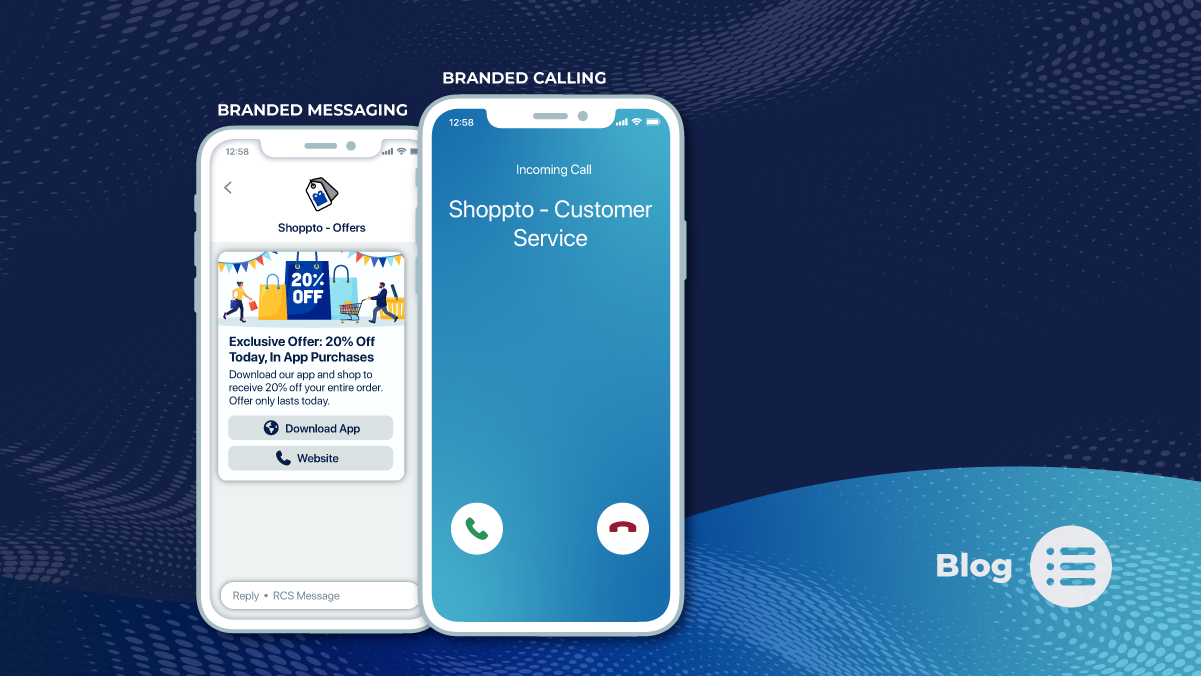
Rich Communication Services (RCS) is part of that shift. Unlike SMS or MMS, RCS allows businesses to communicate through verified sender identities that support logos, branded experiences, interactive conversations, and richer engagement options.
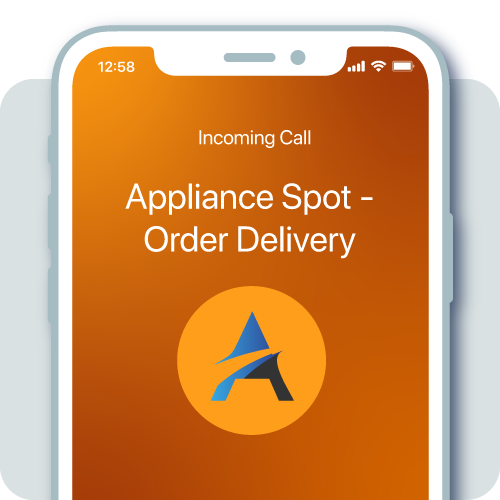
In practice, this could mean a retailer sending a customer an order update through a branded RCS message. The customer taps a button to request a callback, and that action triggers an authenticated, logo-branded call directly to their device.
“The customer never thinks about the technology operating in the background,” Whitehurst said. “They simply experience the same trusted interaction continuing from messaging into voice. That continuity matters because consumers no longer think in terms of channels. They think in terms of interactions and consistent behavior.”
Historically, every channel transition forced customers to reconsider whether a communication was legitimate. A trusted app or message could suddenly shift into an anonymous phone call or a text from an unfamiliar number, creating confusion and giving bad actors room to exploit the lack of visible identity. Converging branded messaging with authenticated voice removes that gap by letting enterprises carry a recognizable identity through the entire interaction.
Why Isn't Branding Alone Enough to Stop Fraud?
Branding creates recognition, but recognition alone doesn't stop impersonation. In legacy messaging environments, bad actors can imitate legitimate enterprises by manipulating sender names, message formatting, and visual details that appear authentic to consumers. In voice, the risk is even higher: a scammer can pull a customer service number off the back of a credit card, download a spoofing app, and impersonate a trusted brand within minutes.
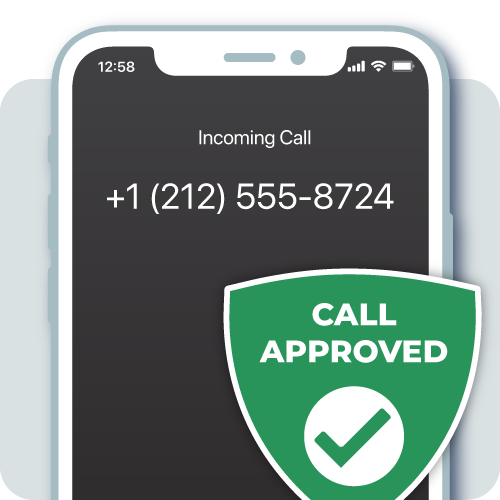
That is why identity verification at the exact moment of interaction matters so much. End-to-end call authentication combined with a branded caller ID protects against unauthorized use of business numbers. Authentication creates a protective layer around enterprise communications, closing off an attack vector that bad actors rely on to impersonate legitimate businesses.
Consumers increasingly rely on visible identity cues to decide whether a communication can be trusted. When a verified logo or authenticated identity is missing, the inconsistency is immediately noticeable, and fraudulent interactions stand out because they no longer resemble the trusted experiences consumers expect.
What Does the Next Phase of Branded Communications Adoption Look Like?
The branded communications market is entering a new phase. For years, providers had to explain why branded calling and authentication mattered. Now, businesses are experiencing the fallout firsthand as customers increasingly ignore calls and messages they don't recognize.
At the same time, enterprises adopting these strategies need to understand that each communication channel carries its own behavioral expectations and compliance requirements. Messaging platforms, for example, require careful management of opt-in and opt-out data, customer consent, and channel-specific policies. Some companies risk losing access to messaging platforms altogether because they underestimate how much compliance and customer trust matter.
Call authentication is quickly moving from a competitive advantage to a baseline expectation. Consumers increasingly expect legitimate businesses to identify themselves clearly and consistently across both voice and messaging. Fraud isn't disappearing, and attackers will keep adapting as they always have, but enterprises now have the tools to make trusted communications instantly recognizable to the people they're trying to reach.
Why Does This Shift Matter for Enterprises Now?
For years, businesses have treated telecom resources as operational utilities. That mindset no longer holds up in an environment where trust directly determines whether customers answer, engage, or respond at all. Enterprises that ignore this shift toward converged, verified identity will increasingly stand out from competitors for the wrong reasons.
FAQs About Branded Messaging
How is ENRICH different from traditional SMS or MMS? ENRICH leverages RCS. While both RCS and SMS are delivered in the recipient's native messaging application, SMS is limited to 160 characters of text and relies on MMS capabilities to support picture and video. ENRICH delivers rich, interactive experiences typically reserved for third-party messaging applications and enables rich media content like high-resolution images, media attachments, and carousels.
Can I use ENRICH for two-way conversations with customers? ENRICH provisions two-way conversational application-to-person (A2P) messaging through the RCS channel. This allows the business to send branded messages via First Orion's API and receive customer replies via First Orion's webhook.
What devices or carriers support RCS and ENRICH? ENRICH reaches all Android and iOS devices (version 18.1 and above) across all major US carriers.
What happens if a recipient's phone does not support RCS? RCS platforms can automatically fall back to SMS when the recipient's device lacks RCS support. This ensures your message reaches the customer regardless of device capabilities. First Orion handles this fallback routing automatically through the ENRICH platform.
What reporting is available with ENRICH? ENRICH Branded Messaging provides delivery and open rates and customer response rates for messages sent to RCS-capable devices.
Learn About the Solutions Behind Every Trusted Connection
From small businesses to global enterprises, First Orion helps you increase answer rates, verify identity, and build customer trust and transparency.
INFORM® Branded Calling - Show your business name, logo, and reason for call so more customers answer with confidence.
ENRICH® Branded Messaging – Deliver personalized, secure RCS messaging with verified sender identity and rich media.
AFFIRM® Reputation Monitoring - Monitor how your outbound calls appear and catch labeling discrepancies fast.
SENTRY® Call Blocking - Block bad actors from spoofing your numbers, protecting trust with your customers.
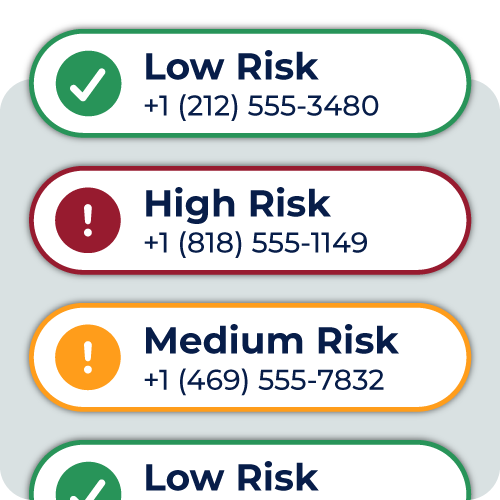
PROTECT+ Risk Detection - Detect suspicious inbound call activity in real time with intelligent risk analysis.
Related Resources
The Real Cost of Staying Anonymous: Answering the 4 Biggest Branded Calling Business Concerns
Why 83% of Businesses Say Branded RCS Messaging is Now a Strategic Priority
When the Phone Lies: A Modern Thriller About Spoof Calls and the Missing Layer of Cybersecurity
How Text Scams are Overloading Your Call Center and How ENRICH Branded Messaging is the Fix