

Key takeaways
- Enterprises invest heavily in firewalls and email security but rarely apply the same protection to voice and messaging channels, despite billions in annual fraud losses.
- RCS enables branded, logo-verified messaging that can trigger an authenticated, branded call, letting identity carry seamlessly from text to voice.
- Branding alone isn't enough. End-to-end call authentication is the layer that actually prevents bad actors from spoofing business numbers.
- Call authentication is shifting from a competitive advantage to a baseline expectation, and companies that ignore this shift risk being mistaken for fraud themselves.
Enterprises must treat voice and messaging identities as strategic assets, says First Orion, using authentication and branded comms to strengthen trust, combat fraud, and improve customer engagement.
Telecommunications fraud has evolved into a sophisticated, multi-billion-dollar global industry. Despite this, many enterprises still approach communications security with an outdated mindset. Too many companies continue treating their phone numbers and short codes as utilities rather than critical business assets.
An enterprise would never hesitate to invest in a firewall to protect its IT network or sophisticated security tools to secure its email infrastructure, so why are so few companies investing in similar protections for their voice and messaging channels?
When businesses fail to secure these channels, they face an ongoing cycle of customer churn, trust erosion, and reimbursement obligations to defrauded consumers. Federal Trade Commission data shows consumers lost billions to fraud and impersonation scams in 2025, underscoring the growing financial and reputational impact of untrusted communications. Businesses are already seeing the consequences through lower response rates, repeated outreach attempts, and growing customer skepticism around anonymous communications.
For years, enterprises have largely responded to these problems after the damage was done. The next phase of communications security is prevention.
The mechanics of real convergence
Enterprises have focused heavily on integrating voice and messaging. But convergence only matters if customers can recognize and trust the business when it reaches out to them across every channel. As a result, businesses are looking for ways to make identity and trust more visible in digital communications.
Rich Communication Services (RCS) is part of that shift. Unlike SMS or MMS, RCS allows businesses to communicate through verified sender identities that support logos, branded experiences, interactive conversations, and overall unprecedented rich engagement options.
In practice, this could mean a retailer sending a customer an update on an order through a branded RCS message. In the message, the customer taps a button to request a callback. That action triggers an authenticated, logo-branded call directly to the customer’s device.
The customer never thinks about the technology operating in the background. They simply experience the same trusted interaction continuing from messaging into voice. That continuity matters because consumers no longer think in terms of channels. They think in terms of interactions and consistent behavior.
Historically, every channel transition forced customers to reconsider whether communication was legitimate. A trusted app or message could suddenly shift into an anonymous phone call or a text from an unfamiliar number, creating confusion and allowing bad actors to exploit the lack of visible identity.
The convergence of branded messaging and authenticated voice changes that dynamic by allowing enterprises to maintain a recognizable identity throughout the interaction.
Authentication is the missing layer
Branding alone is not enough.
In legacy messaging environments, bad actors can imitate legitimate enterprises by manipulating sender names, message formatting, and visual details that appear authentic to consumers. In voice, the risk is even higher. A scammer can take a customer service number from the back of a credit card, download a spoofing app, and quickly impersonate a trusted brand.
That is why identity at the exact moment of interaction has become so important.
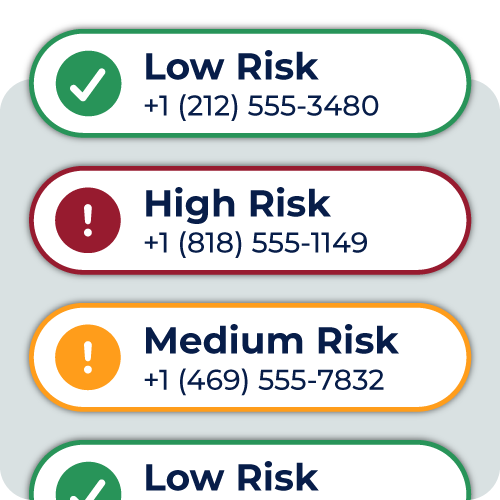
End-to-end call authentication combined with a branded caller ID protects against unauthorized use of business numbers. Authentication creates a protective layer around enterprise communications, removing an attack vector from bad actors attempting to impersonate legitimate businesses.
Consumers are increasingly relying on visible identity cues to decide whether communication can be trusted. When a verified logo or authenticated identity disappears, the inconsistency becomes immediately noticeable. Fraudulent interactions stand out because they no longer resemble the trusted experiences consumers expect. Trust is becoming visual.
The gatekeeper to customer engagement
The branded communications market is entering a new phase of adoption. For years, providers had to explain why branded calling and authentication mattered. Now, businesses are experiencing the fallout firsthand as customers increasingly ignore calls and messages they do not recognize.
At the same time, enterprises adopting these strategies must understand that each communication channel carries its own behavioral expectations and compliance requirements. Messaging platforms require careful management of opt-in and opt-out data, customer consent, and channel-specific policies.
Some companies risk losing access to messaging platforms because they underestimate the importance of compliance and customer trust. Over the next few years, communications identity will become a much larger priority for enterprises.
Call authentication is quickly moving from a competitive advantage to a baseline expectation. Consumers increasingly expect legitimate businesses to identify themselves clearly and consistently across voice and messaging interactions.
Fraud is not disappearing. Attackers will continue adapting, just as they always have. But enterprises can now make trusted communications instantly recognizable to consumers.
For years, businesses have treated telecom resources as operational utilities. That mindset no longer works in an environment where trust directly influences whether customers answer, engage, or respond at all.
Trust customers can recognize is becoming one of the most important security layers in modern communications. Enterprises that ignore this shift will increasingly stand out for the wrong reasons.
About Josh Whitehurst
Josh is instrumental in developing and overseeing First Orion's most strategic solutions and today he is responsible for all Product functions. His strengths lie in identifying and developing solutions needed in the marketplace and leveraging his innovative spirit to expand the ecosystem. Before joining First Orion, he co-founded a telemedicine startup and a marketing consulting firm. Whitehurst received his bachelor’s degree from the University of Central Arkansas in Conway, where he was a founding father for the UCA chapter of Phi Gamma Delta International Fraternity.