Key Takeaways
- About 7 in 10 online carts end without a purchase. Baymard Institute puts the average at 70.22%, which means roughly 700 unfinished orders for every 1,000 carts.
- Mobile shoppers abandon more often than desktop shoppers, and smartphones drove 56.4% of U.S. holiday online spending in 2025, so recovery messages need to work on a phone.
- SMS (Short Message Service) reaches nearly every phone, but it delivers plain text from an unverified number in a channel where scam texts are common.
- RCS (Rich Communication Services) adds a verified sender, product images, carousels, buttons, and read data, which increase customer trust and engagement.
- Before choosing, retailers should weigh audience device mix, consent, cart-platform integration, cost per recovered order, and measurement, and run an SMS control group.
How big is the abandoned cart problem for retailers?
Baymard Institute averaged 50 studies published between 2006 and 2025 and found an abandonment rate of 70.22%. Individual studies range from 55% to 84%, and the average has stayed near 70% for more than a decade. For every 1,000 carts, about 702 end without an order.
Peak shopping periods raise the stakes. Adobe Analytics reported that U.S. consumers spent $257.8 billion online between November 1 and December 31, 2025. Cyber Week brought in $44.2 billion, and Cyber Monday alone produced $14.25 billion. Adobe also reported that mobile devices generated 56.4% of that holiday revenue.
Why do shoppers abandon carts, and which reasons can a text message address?
Baymard's found that 42% of U.S. online shoppers have abandoned a cart because they were just browsing. Among the remaining reasons, shoppers cited:
- Extra costs too high (shipping, tax, fees): 40%
- Delivery too slow: 20%
- Did not trust the site with card information: 19%
- Site required an account: 18%
- Checkout too long or complicated: 17%
- Website errors or crashes: 17%
- Unsatisfactory returns policy: 13%
- Could not see total cost up front: 12%
- Card declined: 10%
- Too few payment methods: 9%
A message cannot fix a forced account creation or a long checkout form. Those need design changes. A message can reach shoppers who paused to compare prices, got interrupted, or had an unanswered question about shipping or returns. That group is where the choice between SMS and RCS matters.
How well does SMS recover abandoned carts?
SMS earns its place because of reach and attention. Mobilesquared reports an average SMS open rate of 98%. For comparison, a Klaviyo benchmark built from more than 143,000 abandoned-cart email flows found an average open rate of 50.5% and an average placed-order rate of 3.33%, rising to 7.69% for the top 10% of stores. Published SMS recovery results vary widely by vendor and list quality, so retailers should treat them as directional and measure their own.
SMS also has limits that matter for cart recovery:
- Format. SMS caps text at 160 characters and depends on MMS for pictures and video. A reminder cannot show the product or offer a one-tap action.
- Identity. An SMS reminder arrives from a number, often with a shortened link. Shoppers cannot confirm who sent it.
- Trust. The FTC reported $470 million in consumer losses to text scams in 2024, more than five times the 2020 figure, even as the number of reports fell. Fake delivery notices and fake fraud alerts lead the reports. In 2025, the FTC recorded a record $15.9 billion in total fraud losses, and text messages were the top contact method in fraud reports.
A cart reminder with an unfamiliar number and a link looks like the messages shoppers have learned to ignore.
What does RCS add to a cart reminder?
RCS delivers branded, interactive messages inside the phone's native messaging app. For cart recovery, that changes four things:
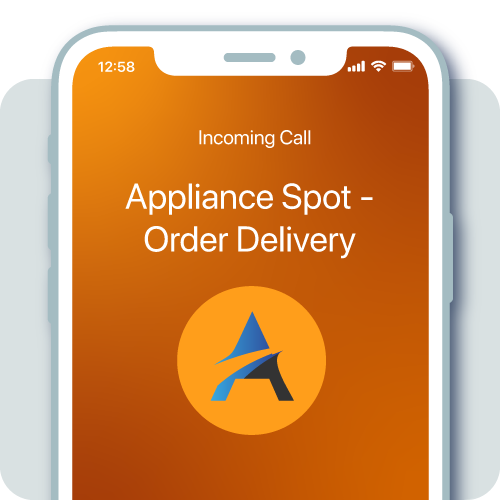
- Verified identity. The message shows the retailer's name and logo with a verified sender badge.
- Product content. High-resolution images and carousels show the exact items left behind.
- Built-in actions. Buttons and suggested replies let shoppers return to the cart, ask about shipping, or check the return policy without leaving the thread.
- Two-way conversation. Shoppers can reply, and the retailer can answer inside the same conversation.
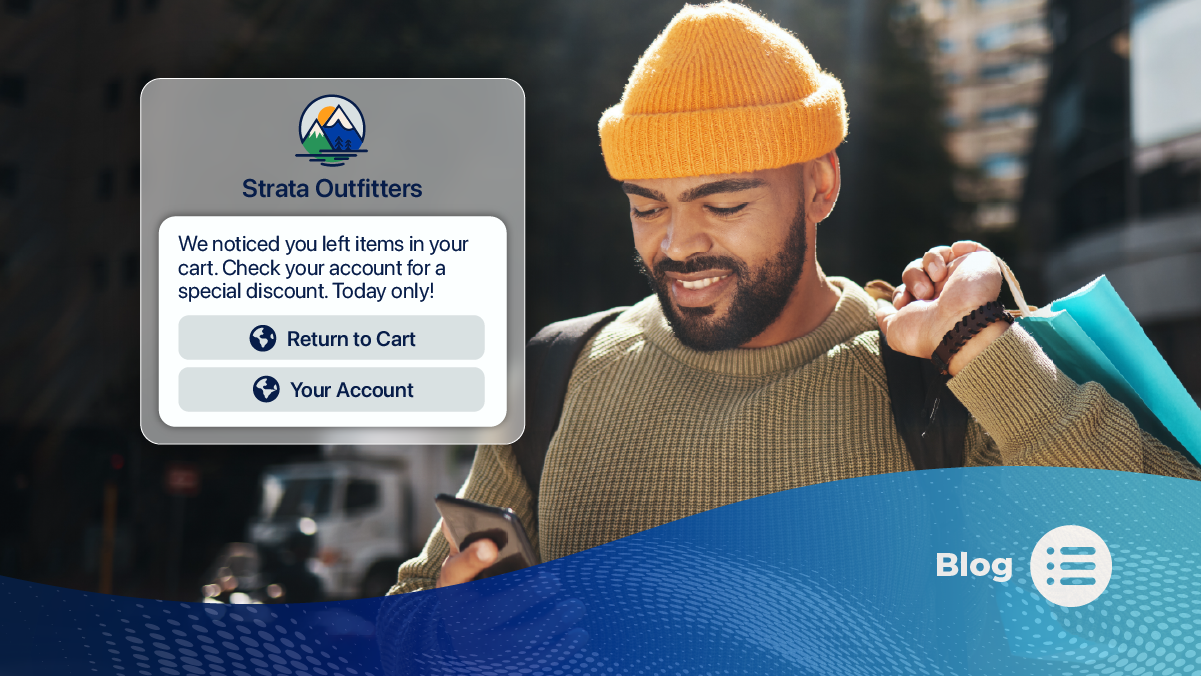
A sample RCS reminder might show the shopper's item with its photo, size, and price, a "Return to cart" button, and quick replies for "Shipping options" and "Return policy." The SMS version of the same reminder is a sentence and a link.
RCS needs a supporting device. First Orion's ENRICH Branded Messaging reaches Android devices and iPhones running iOS 18.1 and above across all major US carriers.
How do RCS and SMS compare for abandoned-cart recovery?
How can retailers structure an RCS abandoned-cart sequence?
The sequence below is a starting framework to test, not a benchmark.
- Reminder. Send a short message after the shopper leaves, with the item image, name, price, and a "Return to cart" button.
- Follow-up. Send a second message the next day with quick replies for shipping, returns, and sizing questions. Use the two-way thread to answer them.
- Optional incentive. For price-sensitive carts, and only where margin allows, address cost. Baymard found extra costs are the leading stated reason for abandonment, so a free-shipping message may help more than a discount.
Stop the sequence as soon as the shopper buys or opts out.
RCS Messaging FAQs
Do shoppers need to download an app to receive RCS messages?
No. ENRICH messages arrive in the shopper's default messaging app.
How is ENRICH different from traditional SMS or MMS?
While both RCS and SMS are delivered in the recipient's native messaging application, SMS is limited to 160 characters of text and relies on MMS capabilities to support picture and video. ENRICH delivers rich, interactive experiences typically reserved for third-party messaging applications and enables rich media content like high-resolution images, media attachments, and carousels.
Can I use ENRICH for two-way conversations with customers?
ENRICH provisions two-way conversational application-to-person (A2P) messaging through the RCS channel. This allows the business to send branded messages via First Orion's API and receive customer replies via First Orion's webhook.
What devices or carriers support RCS and ENRICH?
ENRICH reaches all Android and iOS devices (version 18.1 and above) across all major U.S. carriers.
What happens if a recipient's phone does not support RCS?
RCS platforms can automatically fall back to SMS when the recipient's device lacks RCS support. This ensures your message reaches the customer regardless of device capabilities. First Orion handles this fallback routing automatically through the ENRICH platform.
What reporting is available with ENRICH? ENRICH Branded Messaging provides high-level visibility into your RCS agents from one centralized dashboard. Businesses can see:
- Messages sent and received
- Open rates
- Rich content activity
- Customers opt-out rate
- Agent status and use case
- Clicks to any action buttons
Start Recovering Your Sales
Ready to test RCS for cart recovery? Learn more about ENRICH Branded Messaging, try the live RCS demo on the product page, or talk to First Orion.