
RCS vs. Push Notifications: Guide to Choosing the Right Channel for Critical Alerts
A guide on choosing the right delivery channel for time-sensitive customer alerts.
Businesses send high-stakes alerts like OTPs, fraud notices, payment reminders, and outage updates, and each one depends on the recipient seeing it, trusting it, and acting fast. Push notifications only reach a customer if the app is installed, permissions are enabled, and the device is configured correctly. When any of those conditions break, the alert is delayed, hidden, or missed. This is the exact reliability gap First Orion built ENRICH® Branded Messaging to close.
In this guide, you'll learn how:
- Push notifications depend on your app ecosystem, requiring the recipient to have your app installed, notifications enabled, and a working connection, while RCS delivers inside the native messaging app recipients already use and trust.
- High-stakes alerts (OTPs, fraud notices, payment reminders, appointment changes, delivery windows, and outage notices) are judged by whether the recipient sees, believes, and acts on them in time, not by send cost alone.
- Push notifications still make sense for active app users, alerts tied to in-app behavior, and lower-risk notices like reminders and feature nudges.
- RCS becomes the better choice when the recipient needs to trust the message immediately, when friction before action has to be minimal, and when the alert needs to stand on its own without a prior app relationship.
- ENRICH delivers secure, branded RCS messages with verified sender identity, rich media, and two-way interaction, giving high-stakes alerts a direct path from delivery to response.
First Orion in the News
View All First Orion News

October 22, 2026
First Orion ENRICH Wins Mobile Breakthrough Award
First Orion’s ENRICH Branded Messaging has been named “Telecommunications Solution of the Year” in the 10th annual Mobile Breakthrough Awards, recognizing its verified-identity RCS messaging for businesses.
Read More
October 13, 2026
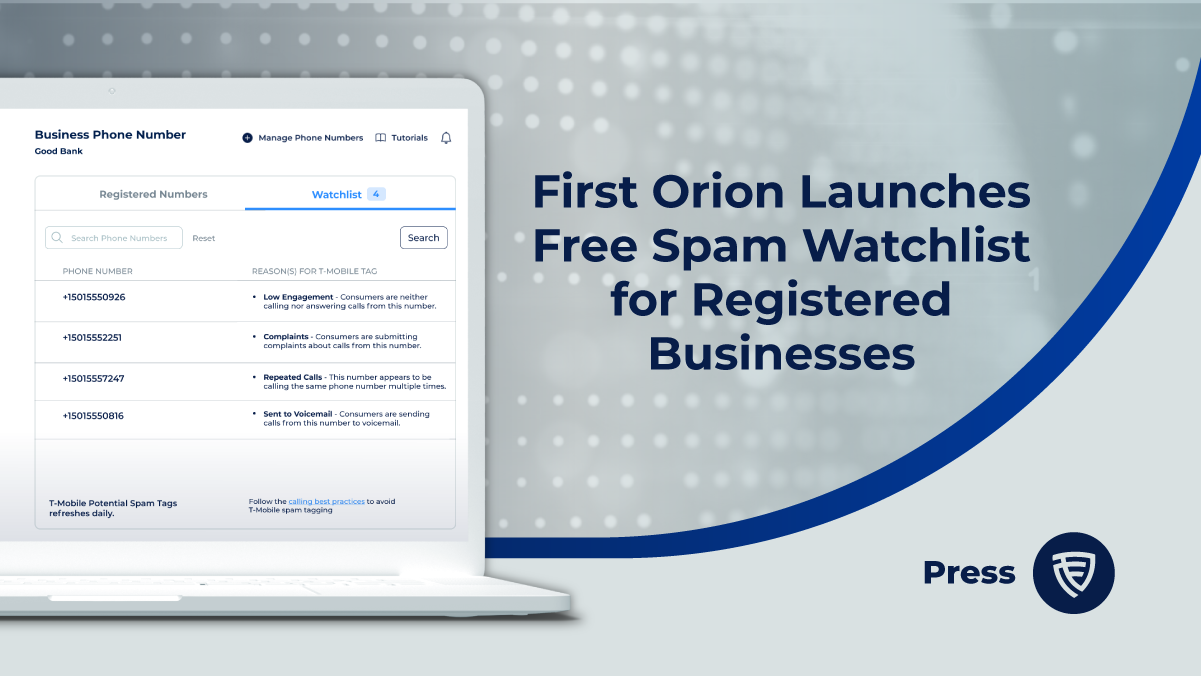
First Orion Launches Free Spam Watchlist
First Orion launched Watchlist within its free Business Number Registration service, letting registered businesses see whether their numbers have been tagged as Potential Spam on the T-Mobile network and view the calling behaviors behind the tag.
Read More
September 30, 2026
First Orion & Vodafone Launch Branded Calling in Ireland
First Orion and Vodafone are expanding INFORM Branded Calling to Ireland, building on launches in the United Kingdom and Germany. Ireland is supported through the same Vodafone CAMARA-based API integration already incorporated into First Orion’s platform, with no additional integration work required.
Read More