Key Takeaways
- Verified brand identity improves trust by making the sender immediately recognizable before the recipient engages.
- Anonymous or generic business texts create friction that lowers response and drives avoidable support volume.
- ENRICH® Branded Messaging, powered by RCS, supports a stronger identity, richer presentation, and a more secure branded experience than standard SMS.
- High trust use cases like appointment reminders, billing, and service alerts benefit most from clear sender identity.
Customers Don't Trust Anonymous Messages
Trust is one of the biggest challenges in business text messaging. When customers receive texts from unfamiliar numbers, anonymous senders, or messages with suspicious links, they are less likely to open, trust, or act on them. RCS messaging with verified brand identity helps solve that problem.
Why Does Trust Matter in Business Text Messaging?
Trust directly affects whether a recipient opens, believes, and acts on what you send. If the message concerns a delivery update, fraud alert, appointment confirmation, account notice, or authentication code, hesitation creates operational cost. A delayed response can mean a missed appointment, an unresolved account action, an inbound service call, or a failed customer journey that should have taken one tap.
That is why high-performing messaging programs do more than focus on delivery. They focus on recognition, legitimacy, and message confidence at the moment the text appears.
What Is Verified Brand Identity in Business Messaging?
Verified brand identity is the set of signals that helps a recipient know your message is actually from your business. Depending on the channel, that can include your business name, logo, verified sender details, and branded presentation inside the native messaging experience.
The core purpose is straightforward: reduce doubt before the recipient reads the message content. If the sender looks anonymous, every message has to overcome skepticism before it can do its job. If the sender is clearly identified, the path to engagement is shorter.
For enterprise teams, this matters most when the communication is high-volume, high-stakes, or both.
Why Does Standard Business Texting Often Fail the Trust Test
Traditional SMS texting often relies on phone numbers or sender experiences that give the recipient very little context. The message may be legitimate, but to the person receiving it, it can still look unrecognized, generic, or risky.
“The primary challenge of legacy SMS is the sender’s anonymity,” said Perry Claunch, Senior Director of Product Management at First Orion. “When a customer receives a text from an unrecognized short code or long code, there is an immediate sense of friction and suspicion. In an RCS-first world, brands must replace these codes with a verified RCS agent.”
That gap creates several predictable problems:
- Recipients ignore the message because they do not recognize the sender
- Recipients hesitate to tap links or take action
- Important alerts create confusion instead of clarity
- Service teams absorb avoidable inbound calls from people checking whether the text was real
- Brand trust erodes when legitimate business communication looks indistinguishable from suspicious traffic
How Does Verified Brand Identity Improve Trust in Business Text Messaging?
Verified brand identity improves trust by removing ambiguity from the sender experience. Instead of asking the recipient to infer legitimacy from message copy alone, it makes identity visible at the start of the interaction.
That shift improves performance in several ways:
1. It makes your business immediately recognizable
When recipients can see who is messaging them, they spend less time evaluating whether the communication is legitimate. That matters most for alerts that require quick action.
2. It reduces friction before the recipient engages
Every extra second of doubt lowers the odds of response. Clear identity signals reduce that friction and create a smoother path to reading, tapping, replying, or completing the next step.
3. It supports trust and transparency in sensitive communications
In healthcare, finance, insurance, and other regulated or high-trust environments, recognition is not enough on its own. Recipients need confidence that the message is secure and tied to a legitimate business identity.
4. It protects the brand experience across channels
If your business invests in INFORM® Branded Calling, reputation monitoring, Call Authentication, and secure digital communication, anonymous texting creates a weak point. Verified brand identity helps create a more consistent branded communication experience across voice and messaging.
Which Messages Benefit Most From Verified Brand Identity?
Any message where confidence affects action can benefit, but the impact is strongest in a few common categories.
Authentication and security messages
One-time passwords, account alerts, login verification prompts, and fraud notifications work best when recipients trust the sender immediately.
Appointment and service reminders
Healthcare providers, home services teams, and customer support organizations rely on reminders to reduce no-shows and keep schedules on track. Verified identity helps those reminders feel legitimate rather than ignorable.
Delivery and operational notifications
Shipping updates, pickup alerts, outage notices, and service windows are more useful when recipients recognize the sender and trust the link or next step.
Billing and payment communications
If the text involves an invoice, balance, due date, or payment reminder, sender confidence becomes part of the message itself.
How Does RCS Support Verified Brand Identity Better Than Standard SMS?
SMS remains useful for broad reach and simple one-way alerts. But standard SMS offers limited support for identity and presentation, which means the recipient often has to trust the message without much visible proof.
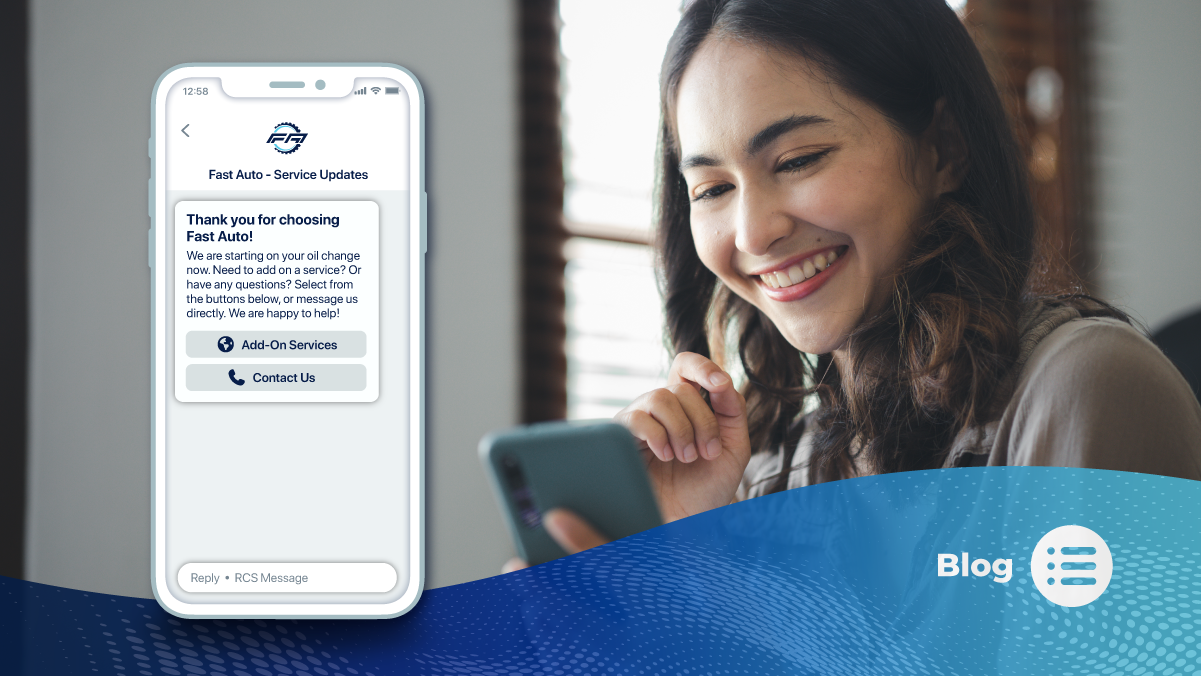
RCS messaging improves that experience by supporting richer brand presentation, verified sender identity, and more interactive communication inside the native messaging app. That gives your business more control over how legitimacy is communicated before the recipient even reads the full message.
“Enterprises must ensure the official brand name, logo, and verification badge are present from the very first touchpoint to differentiate the thread from potential spam,” said Claunch. “When a customer sees brand colors and a verified checkmark, the psychological barrier to engagement disappears, creating a ‘safe space’ for commerce to happen right within the native messaging app.”
For teams trying to improve trust, that difference matters. If your objective is not only delivery but also confidence, recognition, and response, RCS gives you more operational capability than basic SMS.
The Practices That Separate High-Trust Messaging Programs From Ones That Underperform
The strongest programs do not treat trust as a design layer added after deployment. They build it into the communication workflow from the beginning.
Align identity across channels
If you use INFORM® Branded Calling, your messaging experience should not feel disconnected from it. Recipients should see a consistent brand experience whether they receive a call, text, or follow-up communication.
Match the channel to the message stakes
Not every message requires a rich branded experience. But when the communication involves identity verification, sensitive account information, payment activity, or an important service action, sender confidence should be part of the channel decision.
Reduce ambiguity in the first screen view
The first screen view determines whether a recipient continues. Prioritize sender clarity, branded presentation, and a direct message purpose.
Treat trust as a measurable operational outcome
Trust should connect to metrics you already care about, including engagement, response, completion rate, support deflection, and recipient follow-through.
How to Evaluate Whether Your Messaging Program Has a Trust Problem
Most teams can spot the issue by looking at downstream symptoms.
Ask these questions:
- Are recipients failing to act on time-sensitive text messages?
- Are service teams fielding avoidable calls from people checking whether a text is legitimate?
- Are links, reminders, or account notices underperforming despite strong timing and relevant content?
- Does your current sender experience look anonymous compared to the importance of the message?
- Are you investing in voice but leaving messaging unbranded?
If the answer to several of these is yes, the issue may not be message timing or copy. It may be sender trust.
Where ENRICH Fits into a Verified Messaging Strategy
ENRICH helps businesses deliver branded Messaging with verified identity, rich media, and two-way interactions inside the native messaging app. For enterprises that need to strengthen trust, reduce friction, and create a more secure branded experience, that matters at the moment recipients decide whether to engage.
This is especially relevant for organizations managing high-volume communications, sensitive account activity, or service workflows where trust affects outcomes. From small businesses to global enterprises, the business case is the same: when identity is clear, communication performs better.
Branded Messaging FAQs
How is ENRICH different from traditional SMS or MMS? ENRICH leverages Rich Communications Services (RCS). While both RCS and SMS are delivered in the recipient's native messaging application, SMS is limited to 160 characters of text and relies on MMS capabilities to support picture and video. ENRICH delivers rich, interactive experiences typically reserved for third-party messaging applications and enables rich media content like high-resolution images, media attachments, and carousels.
Is SMS enough for trusted business messaging? SMS can still be effective for simple notifications where reach is the main requirement. But if your business needs stronger identity signals, richer presentation, and more recipient confidence, RCS may be a better fit.
Can I use ENRICH for two-way conversations with customers? ENRICH provisions two-way conversational application-to-person (A2P) messaging through the RCS channel. This allows the business to send branded messages via First Orion's API and receive customer replies via First Orion's webhook.
What devices or carriers support RCS and ENRICH? ENRICH reaches all Android and iOS devices (version 18.1 and above) across all major US carriers.
What happens if a recipient's phone does not support RCS? RCS platforms can automatically fall back to SMS when the recipient's device lacks RCS support. This ensures your message reaches the customer regardless of device capabilities. First Orion handles this fallback routing automatically through the ENRICH platform.
What reporting is available with ENRICH? ENRICH Branded Messaging provides delivery and open rates and customer response rates for messages sent to RCS-capable devices.
Learn About the Solutions Behind Every Trusted Connection
From small businesses to global enterprises, First Orion helps you increase answer rates, verify identity, and build customer trust and transparency.
INFORM® Branded Calling - Show your business name, logo, and reason for call so more customers answer with confidence.
ENRICH® Branded Messaging – Deliver personalized, secure RCS messaging with verified sender identity and rich media.
AFFIRM® Reputation Monitoring - Monitor how your outbound calls appear and catch labeling discrepancies fast.
SENTRY® Call Blocking - Block bad actors from spoofing your numbers, protecting trust with your customers.
PROTECT+ Risk Detection - Detect suspicious inbound call activity in real time with intelligent risk analysis.
Related Resources
5 Principles for Navigating the RCS Evolution
Trust You Can See – The Convergence of Voice, Messaging, and Identity
ENRICH Branded Messaging Guide for Banks and Credit Unions in 2026
How Text Scams are Overloading Your Call Center and How ENRICH Messaging is the Fix