A practical guide to using verified, two-way RCS messaging to help patients recognize, confirm, and manage appointments with less friction.
Key takeaways
- Appointment reminders fail when the channel itself creates friction. An unfamiliar sender, one-way replies, and unstructured text push patients toward the call center instead of a confirmation.
- Verified business identity helps patients trust a reminder on sight. ENRICH displays the organization's name and logo inside the native messaging app, distinguishing a legitimate message from an anonymous text.
- Two-way RCS turns a reminder into a completed action. Patients can confirm, reschedule, or request a call directly from the message, with replies routed to scheduling systems through API and webhook connectivity.
- Success depends on deployment discipline, not just the channel. Organizations should start with one appointment journey, define the reply path before launch, and measure confirmation rate, reschedule rate, no-show rate, and call volume against the current process.
The State of Healthcare Messages
A reminder sent from an unfamiliar number leaves the patient with an unnecessary decision: open it, ignore it, or wonder whether it is legitimate. Even when the message is delivered, a plain-text reminder may not make the next step clear.
Healthcare organizations need appointment reminders to do more than announce a date and time. The reminder should identify the sender, provide the information the patient needs, and make it easy to confirm or change the appointment. ENRICH® Branded Messaging changes this by delivering verified, two-way RCS conversations with rich media, logos, and branding inside the native messaging app.
Why Do Healthcare Appointment Reminders Create So Much Friction?
Appointment scheduling already involves multiple points of failure. A patient may need to coordinate transportation, work, childcare, preparation instructions, insurance questions, and more. A reminder that says only “Reply Y to confirm” does not address every operational need, but it can make the first decision easier.
The communication channel itself can add friction:
- An unknown sender makes the message harder to trust.
- A one-way text gives patients no clear path to reschedule.
- A long block of text makes time, location, and instructions difficult to scan.
- A link without context can look suspicious.
- A reply that goes nowhere pushes patients toward the call center.
A reminder can be delivered and still fail to produce a confirmation. The difference is whether the message helps the patient understand what is happening and what to do next.
What Does an ENRICH Appointment Reminder Look Like?
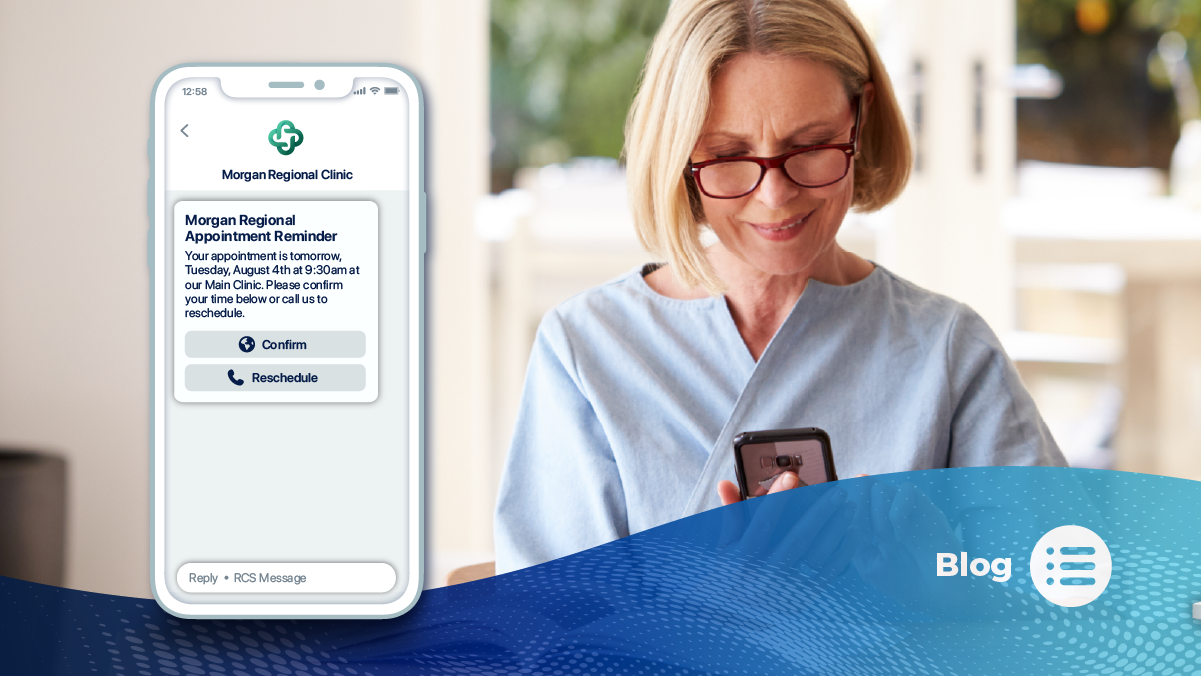
ENRICH brings verified identity, branded presentation, rich content, and interactive actions to the native messaging app. The following is an illustrative example of how a healthcare reminder could be structured. It is not a required template.
The patient sees the healthcare organization’s name and verified identity before engaging. The message is structured around the decision the patient needs to make, rather than requiring them to interpret a paragraph of instructions.
A richer version could include a branded image or card with the organization’s logo, appointment details, arrival instructions, and a single suggested action. A multi-location health system could also give the patient a clear path to view location information or contact the appropriate scheduling team.
The design principle is simple: include enough context to build confidence, then make the next action obvious.
How Does ENRICH Make Appointment Reminders Better?
1. Make the sender recognizable
Patients receive messages from health systems, specialty practices, imaging centers, pharmacies, and third-party scheduling platforms. An unfamiliar number does not tell the recipient which organization is contacting them or whether the message is legitimate.
ENRICH displays a verified business identity, including the organization’s name and logo, inside the native messaging experience. That branded presentation helps patients distinguish a legitimate appointment reminder from an anonymous or suspicious text.
For healthcare organizations, recognition matters because the message often arrives at a sensitive moment: before a procedure, during a referral process, or when a patient needs to make a time-sensitive scheduling decision.
2. Turn the reminder into an actionable conversation
Traditional SMS can send a reminder, but the patient’s next step may require a separate workflow. They may need to call a scheduling team, open a portal, or send an unclear reply.
ENRICH supports two-way RCS conversations with interactive elements such as suggested replies and one-tap actions. A patient could select Confirm, Reschedule, or Request a call directly from the message. The organization can then route that response through its existing systems using API and webhook connectivity.
The goal is not to automate every patient interaction. It is to remove avoidable steps from predictable decisions so staff can focus on requests that require human attention.
3. Present appointment details in a format patients can scan
A reminder should answer the questions patients are most likely to have:
- When is the appointment?
- Where should the patient go?
- What action is required?
- How can the patient change the appointment?
- Where can the patient get help?
RCS supports rich media and branded content that can organize those details more clearly than a plain-text block. Use the format to support comprehension, not decoration. A logo, concise appointment card, map or location link, and clear actions may be more useful than a crowded design.
4. Support two-way replies without forcing a channel change
Patients do not always need a complex conversation. Sometimes they need to say, “I need a different time,” “Can I arrive earlier?” or “Please have someone call me.”
With ENRICH, replies can return to the healthcare organization’s systems through a webhook. That creates a path for routing responses to scheduling staff, contact center agents, or automated workflows. The patient stays in the same messaging thread instead of searching for a phone number and explaining the situation again.
This is especially useful for high-volume appointment types where the response categories are predictable and the organization has a defined escalation path.
5. Measure more than whether a message was sent
Sending volume is not the same as communication performance. ENRICH provides reporting such as messages sent to RCS-capable devices, delivery rates, open rates, and response rates.
Healthcare organizations can combine those measures with operational metrics from scheduling and patient access systems, including:
- Appointment confirmation rate
- Reschedule completion rate
- No-show rate
- Time from reminder to patient response
- Call-center volume related to appointment changes
- Percentage of replies requiring staff intervention
This measurement framework helps teams identify whether the reminder is reaching patients, earning attention, and producing the intended operational outcome.
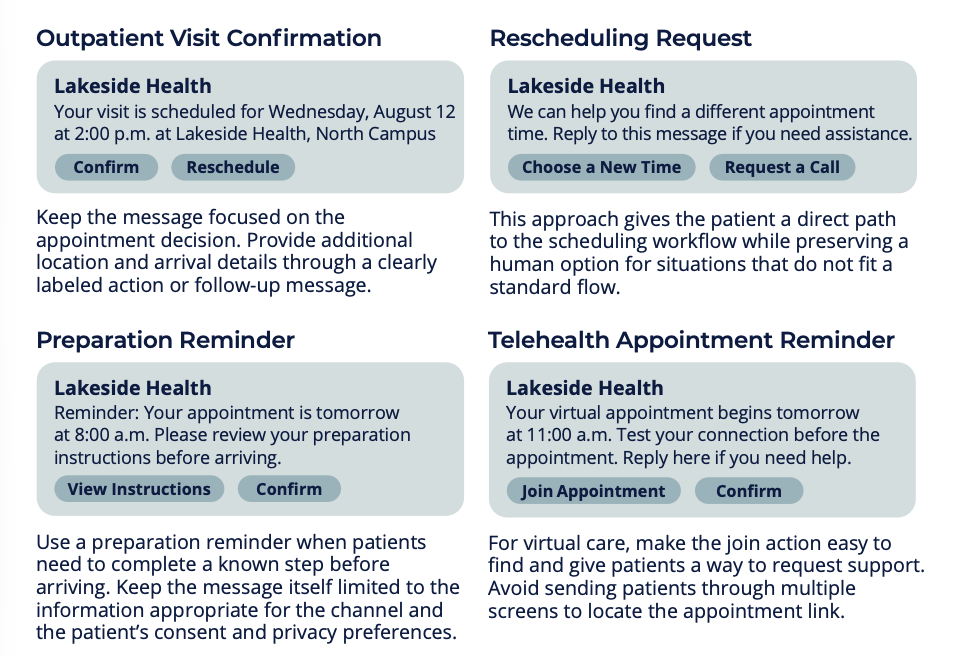
Appointment Reminder Examples for Healthcare Organizations
How Should Healthcare Organizations Deploy ENRICH for Appointment Reminders?
Start with a defined appointment journey
Map the points where a patient needs information or an action: booking, confirmation, preparation, rescheduling, arrival, and follow-up. Select one high-volume appointment type for the initial deployment rather than redesigning every message at once.
Build around patient decisions
Write each message around one primary action. Confirming an appointment, choosing a new time, viewing preparation instructions, and requesting help are different decisions. Separate them when combining them would make the message harder to scan.
Protect privacy by design
Use the minimum necessary information in the message. Review patient consent, opt-out handling, data retention, access controls, and organizational privacy requirements before sending healthcare communications. Do not include sensitive clinical details unless the organization’s approved messaging architecture and policies support that use.
Define the reply path before launch
Decide where confirmations, rescheduling requests, and free-form replies should go. Assign ownership for unresolved responses and establish service-level expectations for staff follow-up. Two-way messaging improves the experience only when the organization is prepared to respond.
Coordinate messaging with calling
A patient may confirm by text and still need a call for a complex scheduling issue. Align the identity and language used in ENRICH with the organization’s branded calling program so the patient receives a consistent experience across voice and messaging.
Compare outcomes against the current process
Measure delivery, opens, responses, confirmations, reschedules, no-shows, and call volume before and after deployment. The appropriate success metric will vary by appointment type, so connect channel reporting to the operational outcome the healthcare organization is trying to improve.
Is ENRICH a Replacement for Traditional SMS?
ENRICH is designed for verified, branded RCS messaging on supported devices and carriers. Traditional SMS remains relevant for basic reach and simple text notifications, while RCS is better suited to appointment journeys that benefit from verified identity, rich content, interactive actions, and two-way conversation.
The right channel strategy depends on the appointment journey, patient preferences, device reach, and operational requirements. For supported recipients, ENRICH gives healthcare organizations more control over how reminders look, how patients respond, and how teams measure performance.
Branded Messaging FAQs
How is ENRICH different from traditional SMS or MMS? ENRICH leverages Rich Communications Services (RCS). While both RCS and SMS are delivered in the recipient's native messaging application, SMS is limited to 160 characters of text and relies on MMS capabilities to support picture and video. ENRICH delivers rich, interactive experiences typically reserved for third-party messaging applications and enables rich media content like high-resolution images, media attachments, and carousels.
Is SMS enough for trusted business messaging? SMS can still be effective for simple notifications where reach is the main requirement. But if your business needs stronger identity signals, richer presentation, and more recipient confidence, RCS may be a better fit.
Can I use ENRICH for two-way conversations with customers? ENRICH provisions two-way conversational application-to-person (A2P) messaging through the RCS channel. This allows the business to send branded messages via First Orion's API and receive customer replies via First Orion's webhook.
What devices or carriers support RCS and ENRICH? ENRICH reaches all Android and iOS devices (version 18.1 and above) across all major US carriers.
What happens if a recipient's phone does not support RCS? RCS platforms can automatically fall back to SMS when the recipient's device lacks RCS support. This ensures your message reaches the customer regardless of device capabilities. First Orion handles this fallback routing automatically through the ENRICH platform.
What reporting is available with ENRICH? ENRICH Branded Messaging provides delivery and open rates and customer response rates for messages sent to RCS-capable devices.
Build Appointment Reminders Patients Can Trust
Make every appointment reminder easier to recognize and act on. ENRICH Branded Messaging helps healthcare organizations deliver verified, branded RCS conversations that bring identity, clarity, and interaction into the native messaging app. Start with one appointment journey, define the response path, and measure the result against the operational outcomes that matter to your organization.
Learn About the Solutions Behind Every Trusted Connection
From small businesses to global enterprises, First Orion helps you increase answer rates, verify identity, and build customer trust and transparency.
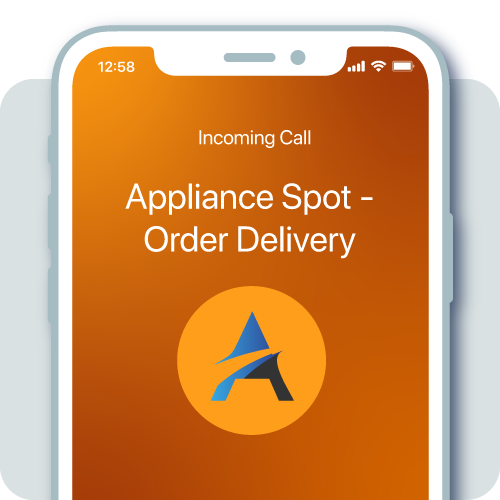
INFORM® Branded Calling - Show your business name, logo, and reason for call so more customers answer with confidence.
AFFIRM® Reputation Monitoring - Monitor how your outbound calls appear and catch labeling discrepancies fast.
SENTRY® Call Blocking - Block bad actors from spoofing your numbers, protecting trust with your customers.
PROTECT+ Risk Detection - Detect suspicious inbound call activity in real time with intelligent risk analysis.
Related Resources
Why 83% of Businesses Say Branded RCS Messaging is Now a Strategic Priority
ENRICH 101: Going Beyond Voice With Branded Messaging
ENRICH Branded Messaging by First Orion Revolutionizes Enterprise Customer Engagement
Why RCS is the New Standard for Business Texting (And How ENRICH Delivers it)
How Banks and Credit Unions Can Use ENRICH to Build Member Trust