Call Authentication 101: Why Businesses Can't Afford to Ignore Authentication
Executive Summary
Voice remains the most powerful way to reach customers, but it’s also under attack. Robocalls, spoofing, and fraudulent activity have eroded trust in phone communications to the point where 87% of consumers no longer answer calls from numbers they don’t recognize1. For businesses, that reluctance to pick up translates into missed opportunities, strained customer relationships, and lost revenue.
First Orion’s Call Authentication is designed to change that narrative. By verifying that calls truly originate from businesses, authentication prevents spoofing, restores customer trust, and improves answer rates, transforming outbound calls from a liability into a powerful engagement tool.
In this paper, we cover:
- Why and how phone communication is broken
- How ignored calls lead to real-world costs
- What is Call Authentication and how it works
- How Call authentication integrates with branded calling
- Key business benefits
- The role of REST APIs
- Compliance and regulatory considerations
- Implementation process and timeline
- How success is measured
- Why leading enterprises choose First Orion
The State of Business Calling: Why It’s Broken
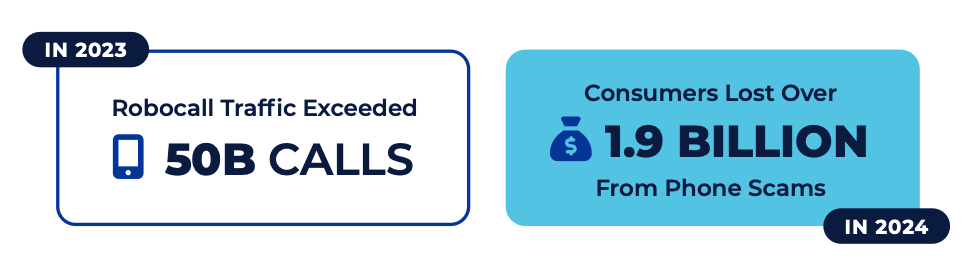
The volume of fraudulent and nuisance calls is staggering. In 2023 alone, robocall traffic exceeded 50 billion calls2, and consumers lost over $1.9 billion in phone scams in 2024, amounting to a median loss of $1,500 per person.3 It’s no surprise people ignore unknown calls.
Even legitimate organizations like banks, healthcare providers, and insurance companies are paying the price. When calls appear unverified or suspicious, customers hesitate to answer. And when scammers impersonate brands, the damage to trust can linger long after the attack ends. This impacts customer perception and creates real business costs. Missed calls mean lost revenue opportunities, increased expenses for repeat outreach and escalations, and the reputational harm of being associated, even mistakenly, with fraud.
What is Call Authentication and Why Does It Matter?
Call Authentication provides businesses with a way to prove their calls are legitimate. By working directly with the business, Call Authentication verifies the business as the calling party, the party they are calling, and the precise timeframe the call is made. When purchasing INFORM® Branded Calling or SENTRY® Call Blocking, this authentication process ensures that only legitimate calls receive branded display treatment, while spoofed calls are intercepted and blocked before reaching the customer. With First Orion’s INFORM® with Logo, authenticated calls get through and arrive with business identity clearly displayed, boosting reputation and restoring confidence in phone communication.
How Does it Work?
- Before a call is made, call information is securely transmitted from the business’s calling platform to First Orion.
- First Orion generates a unique key from portions of the call data. The key is given a Time to Live (TTL) value, ensuring security.
- The business initiates a call.
- The carrier network of the recipient requests call verification from First Orion, which checks if the call has a matching key.
- If a match is verified, the call receives the INFORM branded display. Calls without a match will not be branded.
Branded Calling vs. Call Authentication: What’s the Difference?
Branded Calling and Call Authentication complement each other but serve different purposes. Branded Calling adds context to outreach by showing business name, logo, and call reason to build recognition and trust. Call Authentication, on the other hand, is a feature focused on added security, validating calls through carrier networks and First Orion’s systems to ensure that they truly originate from organizations.
Used together, they provide a powerful one-two punch: Authentication secures the call, while branding humanizes and contextualizes it, so customers answer with confidence.
First Orion in the News
First Orion & Vodafone Launch Branded Calling in Ireland
First Orion Releases 40% Faster with Sauce Labs