Key takeaways
- Branded calling's international growth has been limited by carrier fragmentation, with every market requiring its own custom integration.
- CAMARA, backed by the GSMA, standardizes carrier network APIs so providers can build once instead of negotiating separate integrations per carrier.
- First Orion's Global Exchange supports both CAMARA-standard APIs and existing proprietary carrier infrastructure, so no carrier is left behind based on where they are in adoption.
- First Orion has expanded branded calling into Italy, Spain, Belgium, the Netherlands, and further into the Middle East, Africa, and Asia.
Why Branded Calling Struggles to Scale Across Borders
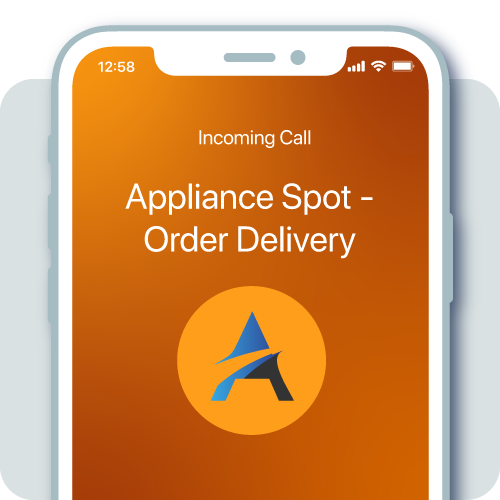
Branded calling works. Where deployed, businesses see higher answer rates, stronger customer trust, and fewer calls mistaken for spam. But ask any operator trying to deploy it across more than one country, and you'll hear the same complaint: the technology that works so well within a single carrier's network becomes a patchwork the moment you try to scale it across borders.
Every carrier has its own integration requirements. Every country has its own regulatory expectations. Every new market means another bespoke build. For an industry built on trust and consistency, that fragmentation is a real constraint on growth, both for the carriers trying to offer branded calling to their subscribers and for the enterprises trying to bring a single brand identity to customers across multiple countries.
This is the problem CAMARA was built to solve, and it's the problem we designed our Global Exchange to solve alongside it.
The Fragmentation Problem Is a Scaling Problem
Branded calling depends on a chain of connections: the enterprise, the branded calling provider, and the carrier network that ultimately delivers the caller ID and rich content to a subscriber's phone. In a single-market model, that chain is manageable. Expand internationally, and the number of chains multiplies. Each carrier relationship historically meant a new integration, new testing cycles, and new operational overhead, all before a single branded call could be delivered in that market.
For carriers, this made branded calling a heavier lift than it should have been. For global enterprises, it meant inconsistent branding experiences depending on which country a customer happened to be calling from. Neither outcome serves the industry's long-term interests.
What CAMARA Changes
CAMARA is an open-source project, backed by the GSMA and a global coalition of carriers and technology providers, working to standardize the network APIs that let applications interact with carrier infrastructure. Instead of every provider negotiating a custom integration with every carrier, CAMARA defines a common API framework that carriers can adopt once and providers can build against consistently.
Applied to branded calling, that standardization has real consequences. It shortens the time between a carrier deciding to offer branded calling and that service actually reaching subscribers. It lowers the engineering cost carriers absorb to support it. And it gives international enterprises more confidence that the branded experience they've built for one market will translate cleanly to the next.
CAMARA doesn't eliminate the need for strong carrier relationships. It changes what those relationships require to get started.
Why Flexibility Still Matters
Standardization is powerful, but it isn't universal, at least not yet. Carriers are at different points in their adoption of CAMARA. Some are ready to deploy CAMARA-standard interfaces today. Others operate on established proprietary APIs that still work well and aren't going away soon. A branded calling platform that only speaks one of those languages closes the door on the other.
That's the thinking behind how we built our Global Exchange. It supports CAMARA-standard branded calling APIs for carriers ready to deploy them, and it continues to integrate with the full range of other carrier-provided APIs already in use across our network. Carriers don't have to choose between standardization and the infrastructure they've already invested in, and enterprises don't have to wait for every carrier in every market to reach the same point in that journey.
This is what makes First Orion’s Global Exchange more than a CAMARA project. It's a platform designed to meet operators wherever they are, and to keep working as more of them move toward common standards over time.
What This Means for International Growth
First Orion’s Global Exchange connects international carriers, including a mid-2025 rollout across the United Kingdom and Germany, giving enterprises a single point of integration to reach subscribers across markets. Our 2026 roadmap extends that footprint further into Europe, with new carrier connections planned across Italy, Spain, Belgium, the Netherlands, and additional carriers in Germany and the UK, alongside continued expansion into the Middle East, Africa, and Asia.
Combined with CAMARA support, that expansion changes the math for everyone in the chain. Carriers get a faster, more standardized path to offering branded calling to their subscribers. Reseller partners and BPOs get the ability to serve enterprise customers across multiple regions through a single, scalable integration rather than a new build for every market. And global enterprises get closer to something the industry has lacked until now: a consistent, trusted calling identity that travels with them, market to market.
The Bigger Picture
Branded calling's next phase of growth won't be won by any single standard or any single carrier deal. It will be won by platforms that can move fluidly between the standardized future the industry is building toward and the varied, real-world infrastructure carriers operate today. CAMARA gives us a common language. Global Exchange gives us the flexibility to speak it, and every other dialect still in use, at the same time.
That combination is what will let branded calling scale the way it should have from the start: as a consistent, trusted experience, no matter which carrier, or which country, a call happens to pass through.
About Temim Nawaf Adwan
Temim is the Managing Director of First Orion’s EMEA region and works out of the First Orion Dubai office. Temim has operated in an executive role for more than 15 years, brokering deals in several sectors—energy, scrap metal trading, refined products—and has been involved in multiple merger & acquisition activities. His representation of companies in the Middle East and Africa has played a direct role in achieving success for their operations. Temim holds a BA in business administration from London Metropolitan University and an MBA from Ecole Superieure de Gestion in Paris.